sysSentry Introduction
sysSentry mainly provides a fault inspection framework. By offering a unified northbound fault reporting interface and southbound plugins that support different inspection and diagnosis capabilities, this framework supports inspection and diagnosis of hardware faults such as CPU, memory, disk, and NPU faults in the system.
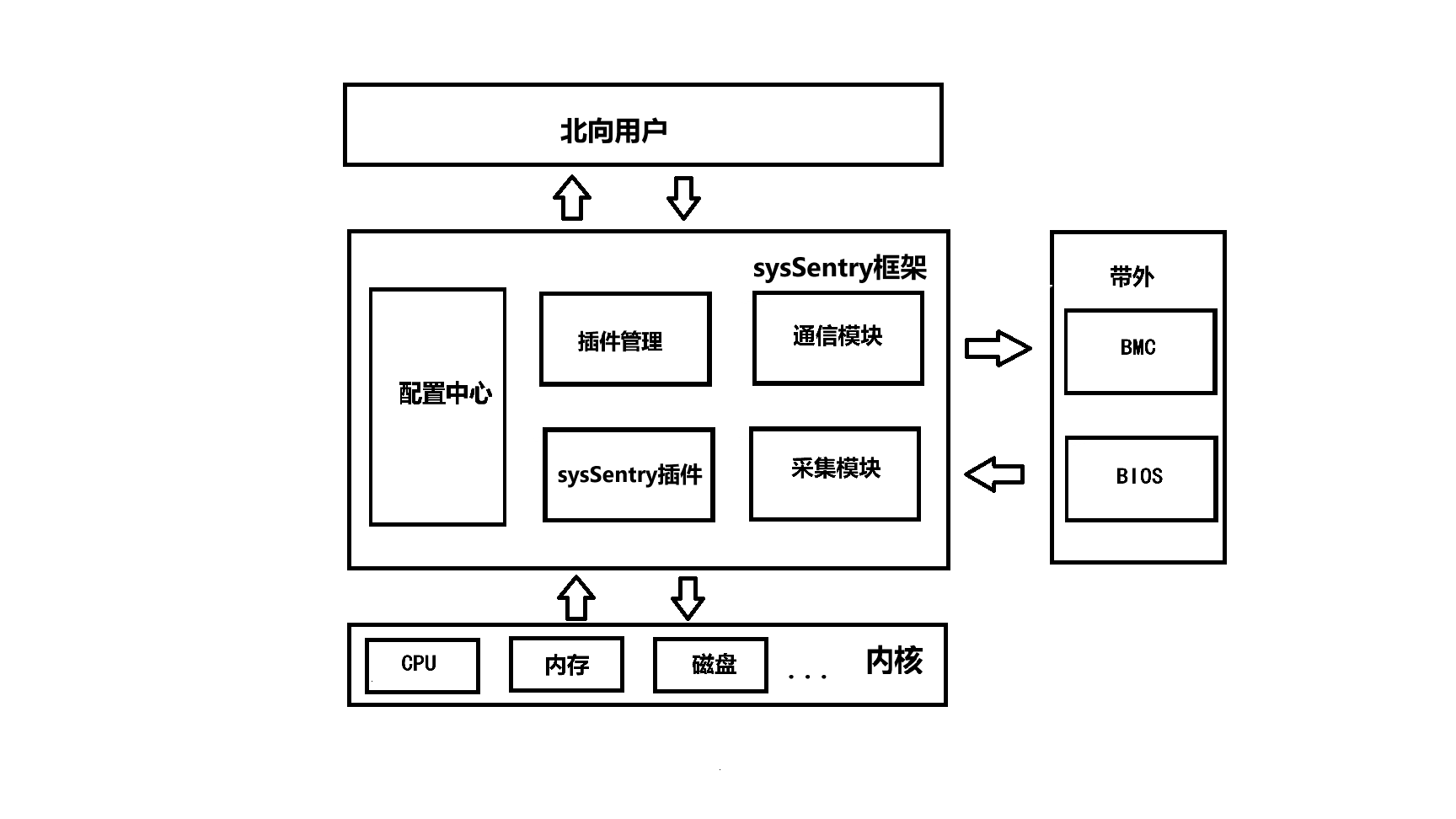
The functions of sysSentry are designed as follows:
- Unified alarm/event notification service: By providing a unified alarm service, it receives the fault information reported by each plugin and forwards the information in a unified manner through this notification service. Each service subscriber can subscribe to messages of different faults as required.
- Unified log service: By providing a unified log service, it supports centralized recording of the fault information of each plugin, improving fault locating efficiency.
- Fault diagnosis/inspection framework: This framework supports the development and configuration of inspection tasks and diagnosis tasks in a plugin-based manner. Different plugins support independent start, stop, status query, result query, and startup mode setting, and plugins developed in different programming languages such as C/C++, Python, and Shell are supported.
- Lightweight data collection service: This service supports querying various hardware status information through kernel interfaces, BIOS, BMC, and other interfaces, so that each plugin can analyze and use the information. It also supports adaptation to different underlying architectures, versions, and data collection services.
版权所有 © 2026 openEuler 保留一切权利
京ICP备2020036654号-1
京公网安备 11030102011597 号
Bug